

Key Insights into 2026's AI Image Generators
- GPT Image 2 (OpenAI) and Nano Banana Pro (Google) stand out as the leading contenders for overall quality and photorealism, often excelling in benchmarks for image quality, prompt adherence, and text rendering.
- While general-purpose tools are powerful, specialized generators like Midjourney for artistic and stylized imagery, and Ideogram for text in images, offer superior results in their niche.
- The trend in 2026 is towards AI creative suites and platforms that integrate multiple models and workflows, allowing users to move seamlessly between chat, image generation, video, and content production.
The year 2026 has witnessed an unprecedented acceleration in AI image generation capabilities. What was once a nascent technology has matured into a sophisticated ecosystem of tools, each vying for supremacy in terms of photorealism, artistic quality, prompt adherence, and specialized functionalities. For creators, marketers, designers, and enthusiasts, navigating this evolving landscape can be challenging. This comprehensive analysis, drawing upon extensive testing and expert evaluations, aims to illuminate the top AI image generators of 2026, highlighting their strengths, unique features, and optimal use cases.
The Evolving Landscape of AI Image Generation
The AI image generation market in 2026 is characterized by intense competition and rapid innovation. Models that struggled with basic elements just a year ago now produce publication-ready typography and photorealistic outputs that cross the uncanny valley. The focus has shifted from mere "wow factor" to practical application within various workflows.
Key Drivers of Innovation in 2026
Advanced Photorealism
The pursuit of photorealism remains a paramount goal for many AI image generators. Models like Nano Banana Pro and GPT Image 2 consistently demonstrate remarkable abilities to create images that are virtually indistinguishable from real photographs. This is crucial for applications such as product photography, architectural visualization, and realistic character generation.
Superior Text Rendering
Historically, AI struggled with rendering accurate and legible text within images. However, 2026 has seen significant breakthroughs in this area, with GPT Image 2, Ideogram, and Imagen 4 now capable of generating reliable and localized in-image text. This advancement opens new possibilities for creating posters, logos, social media graphics, and marketing materials directly within AI tools.
Artistic and Stylistic Versatility
While photorealism is key, the demand for diverse artistic styles continues to grow. Midjourney, in particular, remains the benchmark for aesthetic output, consistently producing images with an intentional and creative quality, whether for editorial portraits, fantasy environments, or abstract concepts.
Workflow Integration and Creative Suites
A significant trend in 2026 is the move towards integrated AI creative suites. Platforms like Tingu.ai, which offer chat, image generation, video, and broader workflows, are gaining prominence. This approach minimizes the need for users to switch between multiple standalone tools, streamlining creative processes for individuals and teams.
Top AI Image Generators of 2026: A Detailed Breakdown
Based on extensive testing and evaluations across various benchmarks, here's a detailed look at the leading AI image generators in 2026:
GPT Image 2 (OpenAI)
OpenAI's GPT Image 2, initially branded "ChatGPT Images 2.0," has emerged as a frontrunner for overall image generation quality. Released in April 2026, it represents a significant leap from its predecessors, GPT Image 1 and 1.5. It excels in complex prompt understanding, layout reasoning, and multilingual in-image text rendering. Many benchmarks, including the Artificial Analysis Image Arena, rank it as the strongest all-round image model available.
- Strengths: Best overall quality, exceptional text rendering, strong prompt understanding, complex composition capabilities.
- Best For: Professional marketing, branding, complex compositions, and any scenario requiring accurate in-image text.
- Access: Available through ChatGPT Plus, OpenAI API, and platforms like TwoShot.
Nano Banana Pro (Google)
Google's Nano Banana Pro, powered by Gemini 3 Pro Image technology, is a formidable competitor, particularly praised for its photorealism and character consistency. It leads third-party benchmarks for UGC ad creatives and is recognized for creating believable humans with precise anatomy and natural poses. Nano Banana Pro also offers solid multilingual support for in-image text.
- Strengths: Leading photorealism, character consistency, excellent for natural scenes and product photography, strong multilingual text support.
- Best For: UGC ad creatives, AI influencer content, workflows requiring consistent characters across multiple images, enterprise users in the Google ecosystem.
- Access: Available as part of the Gemini ecosystem, with tiered API pricing and a free tier via Google AI Studio.
Midjourney
Midjourney continues to be the undisputed champion for artistic and stylized imagery. Version 7, and specifically V8.1, has brought stronger photorealism and enhanced character consistency. It's the go-to tool for generating images with an intentional, aesthetic quality, whether for editorial prints, fantasy art, or abstract concepts. While it may not always win on raw photorealism benchmarks against GPT Image 2 or Nano Banana, its artistic output is consistently praised.
- Strengths: Unparalleled artistic quality, stylized realism, cinematic aesthetics, strong brand recognition, and consistent creative output.
- Best For: Artists, illustrators, marketing art, mood boards, and anyone seeking high-quality, aesthetically pleasing visuals.
- Access: Primarily through Discord, with paid plans.
Ideogram
Ideogram stands out as the specialist for text-heavy visuals. It has made significant strides in rendering readable words within images, making it invaluable for specific use cases where typography is critical. Ideogram 2.0 and 3.0 demonstrate impressive capabilities for logos, posters, product labels, and social ads.
- Strengths: Best for text in images, reliable typography, logo generation.
- Best For: Posters, logos, product labels, memes, T-shirt concepts, social ads.
- Access: Offers a free tier with daily image generation limits.
Adobe Firefly
Adobe Firefly is designed with commercial use in mind, making it a strong choice for businesses and professionals concerned with intellectual property and licensing. Trained on licensed content, it offers a "commercially safe" option for generating images that can be confidently used in marketing campaigns and other corporate applications. Its integration with other Adobe creative tools also makes it attractive for existing Adobe users.
- Strengths: Commercially safe, IP indemnification (for qualifying plans), seamless Adobe integration.
- Best For: Commercial workflows, brand design, marketing campaigns, and professionals needing legally clear image generation.
- Access: Paid plans, with some free tier options.
Canva AI (Magic Media)
Canva's Magic Media, powered by Dream Lab, is a highly accessible AI image generator, particularly for non-designers and small business owners. Its integration directly into Canva's drag-and-drop design environment simplifies the process of adding generated images to presentations, social posts, and marketing materials. While not always the highest quality in raw output, its workflow speed and ease of use are unmatched for certain user bases.
- Strengths: Beginner-friendly, integrated into Canva's design environment, fast workflow for quick visuals.
- Best For: Social media managers, small business owners, educators, rapid visual exploration.
- Access: Free tier available, with more features in Canva Pro.
Flux 2
Flux 2 has gained recognition for offering frontier-quality images at an affordable scale. It represents excellent value for money and has made advanced AI image generation more accessible. It performs well across various production scenarios, from product photography to editorial illustration.
- Strengths: Excellent value, high-quality images at a reasonable cost.
- Best For: Users seeking high quality without breaking the bank, various production scenarios.
ZSky AI
ZSky AI positions itself as a comprehensive AI creative platform, leading benchmarks in photorealism, text rendering accuracy, and anatomical consistency. It offers a conversational AI Creative Director and an unlimited free tier, making it highly accessible for experimentation. It is noted for its ability to produce consistently high-quality results across various art styles.
- Strengths: Best overall value and quality, leading photorealism and text rendering, conversational AI Creative Director, unlimited free tier.
- Best For: Creators seeking a comprehensive and accessible tool with high-quality output across styles.
Understanding Key Performance Metrics: A Visual Comparison
To provide a clearer understanding of how these top AI image generators stack up against each other, we can visualize their performance across several critical dimensions. The following radar chart illustrates a subjective comparison of key attributes based on available reviews and expert opinions as of September 2026.
Comparative Analysis of Leading AI Image Generators (Scale of 1-5, 5 being highest)
The radar chart vividly illustrates the strengths and weaknesses of each generator across various attributes. GPT Image 2 and ZSky AI show strong all-around performance, particularly in photorealism and text rendering. Midjourney's dominance in artistic style is clear, while Adobe Firefly excels in workflow integration, especially for commercial use. Canva AI prioritizes ease of use and integration within its ecosystem, making it highly accessible.
Choosing the Right Tool for Your Needs
The "best" AI image generator ultimately depends on your specific requirements. A "one-size-fits-all" solution is rarely the optimal choice in 2026. Instead, many professionals are adopting a multi-tool approach, leveraging the unique strengths of different platforms.
Consider Your Primary Use Case
For Hyper-Realistic Images and Text Accuracy
If your primary goal is to generate images that are indistinguishable from photographs or require precise text rendering, GPT Image 2 and Nano Banana Pro are excellent choices. They consistently rank high in benchmarks for photorealism and their ability to handle typography within images.
For Artistic and Stylized Creations
Artists and designers seeking unique, aesthetically rich, and stylized visuals will find Midjourney to be the most rewarding. Its advanced controls and artistic rendering capabilities produce truly distinctive results that often elevate the visual narrative.
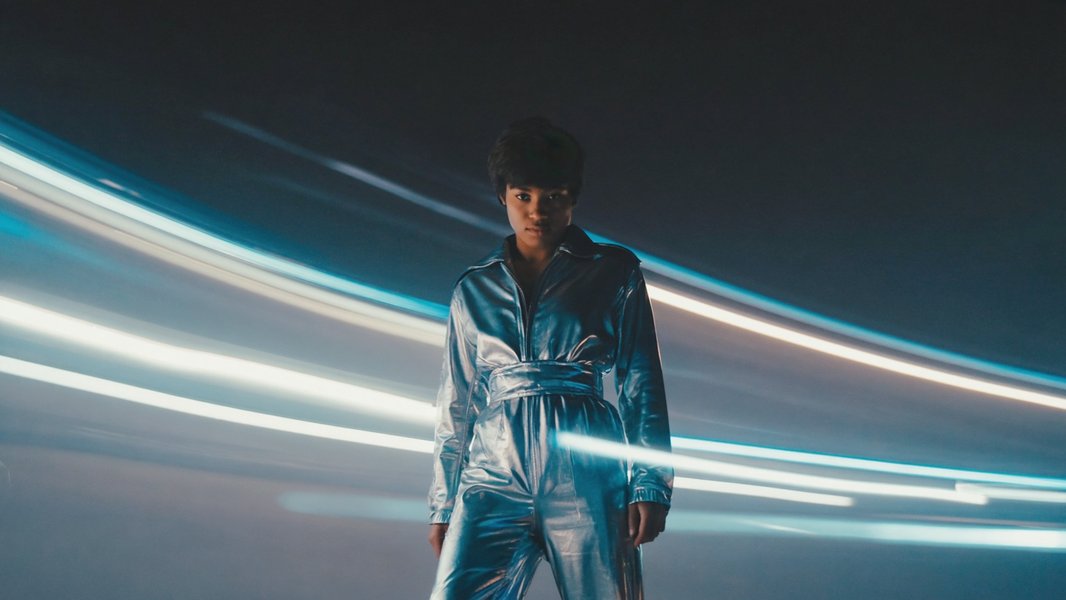
A cinematic still generated by an advanced AI image model, showcasing its artistic capabilities.
For Commercial Safety and Integration
Businesses and marketing teams prioritizing commercial safety, IP indemnification, and seamless integration with existing creative workflows will benefit most from Adobe Firefly. Its focus on enterprise-grade features provides peace of mind for corporate use.
For Quick, Easy, and Accessible Design
For social media managers, small business owners, or those who need to quickly integrate AI-generated visuals into their designs without extensive technical knowledge, Canva AI is an ideal solution due to its user-friendly interface and direct integration.
The Importance of Prompt Engineering
Regardless of the tool, the quality of your output is heavily dependent on the quality of your prompt. Effective prompt engineering involves clear, descriptive language, specifying desired styles, subjects, and compositions. Experimentation and iteration are key to mastering the art of prompting.
Beyond Generation: Image-to-Image and Advanced Editing
The capabilities of AI image tools extend beyond simple text-to-image generation. Image-to-image generators transform existing visuals based on prompts, styles, or specific modifications. These tools are invaluable for tasks such as style transfer, content manipulation, background replacement, and resolution upscaling. Platforms like Runway and Leonardo AI offer advanced editing features that allow for precise control over generated images.
A Mindmap of AI Image Generation Features and Considerations
This mindmap outlines the various features, considerations, and applications within the AI image generation ecosystem of 2026, providing a structured overview of the landscape.
A Mindmap of the AI Image Generation Ecosystem in 2026
The mindmap clearly illustrates the interconnectedness of various aspects, from the leading models and their features to the diverse use cases and crucial considerations like pricing, commercial rights, and ethical implications.
The "Best" Free AI Image Generators of 2026
Access to AI image generation isn't limited to paid subscriptions. Several platforms offer robust free tiers, allowing users to experiment and create without financial commitment, albeit with certain limitations.
- Bing Image Creator / Microsoft Designer: Free with a Microsoft account, offering access to DALL-E 3 legacy, MAI-Image-1, and GPT-4o image models.
- Nano Banana Pro's free tier: Available in the Gemini app, though rate-limited.
- Leonardo.ai: Provides 150 tokens per day, suitable for game assets and concept art.
- Qwen Image 2512: Ranked as a strong free/open-access candidate in public leaderboards.
- ZSky AI: Offers an unlimited free tier, noted for quality and accessibility.
While these free options are powerful, they often come with limitations such as daily credits, watermarks, or restricted commercial use. It's crucial to review the terms of service for each free platform before using images for commercial purposes.
The Future of AI Image Generation: A Bar Chart Perspective
Looking ahead, the development of AI image generators will likely focus on even greater integration, customization, and ethical considerations. The following bar chart provides an opinionated analysis of anticipated future growth and focus areas for different aspects of AI image generation.
Projected Growth Areas in AI Image Generation by 2027 (Scale of 0-10, 10 being highest)
The bar chart suggests that while photorealism and text accuracy will continue to improve, significant growth is also expected in ethical AI and watermarking, reflecting increasing concerns about AI-generated media. Video integration, 3D model generation, and enhanced customization will also be key areas of focus.
A Snapshot of Key AI Image Generators in 2026
The table below provides a quick reference for some of the top AI image generators, their primary strengths, and key considerations.
| Generator | Best For | Key Strengths | Pricing Model | Notable Feature |
|---|---|---|---|---|
| GPT Image 2 | Overall Quality, Text Rendering | High photorealism, complex prompt adherence, multilingual text | Subscription (ChatGPT Plus), API | "Thinking-mode" layout reasoning |
| Nano Banana Pro | Photorealism, Character Consistency | Believable humans, natural scenes, product photography | Tiered API, Free tier | Strong UGC ad creative performance |
| Midjourney | Artistic & Stylized Imagery | Cinematic aesthetics, unique art styles, creative control | Paid Subscription | Benchmark for aesthetic output |
| Ideogram | Text in Images & Logos | Accurate typography, logo generation | Subscription, Free tier | Specialist in text-heavy visuals |
| Adobe Firefly | Commercial Use, Workflow Integration | IP indemnification, licensed content training | Subscription, Free tier | Seamless integration with Adobe ecosystem |
| Canva AI | Beginners, Quick Visuals | Ease of use, integrated design environment | Free tier, Canva Pro | Fast workflow for social media/marketing |
| ZSky AI | Overall Value, Quality & Accessibility | Leading photorealism, text accuracy, unlimited free tier | Free tier, Subscription | Conversational AI Creative Director |
| Flux 2 | Value & Frontier Quality | Affordable high-quality image generation | Paid Subscription | Efficient for diverse production scenarios |
Diving Deeper: An Embedded Video Guide
For those who prefer a visual walkthrough and direct comparisons, this video offers a practical test of several leading AI image generators, showcasing their outputs using identical prompts. It helps illustrate the subtle differences and unique strengths of each tool in action.
Exploring the capabilities of leading AI image generators in 2026 through practical testing.
The video above provides an excellent complement to the textual analysis, allowing viewers to observe the aesthetic qualities, prompt adherence, and overall output fidelity of various AI models when given the same input. This side-by-side comparison is invaluable for understanding the nuances that differentiate these powerful tools.
Frequently Asked Questions
Conclusion
The AI image generation landscape in 2026 is dynamic and rich with innovation. The continuous advancements in photorealism, text rendering, and artistic capabilities have made these tools indispensable for a wide array of creative and professional applications. While general-purpose powerhouses like GPT Image 2 and Nano Banana Pro offer impressive all-around performance, specialized tools like Midjourney and Ideogram excel in their respective niches. The trend towards integrated creative suites and accessible free tiers further democratizes access to this transformative technology. Understanding the strengths and limitations of each generator, combined with effective prompt engineering, empowers users to harness the full potential of AI for their visual needs.
Recommended Further Reading
- Advanced Prompt Engineering Techniques for AI Image Generation
- Ethical Considerations and Copyright in AI-Generated Art
- Comparing AI Image-to-Video Generation Tools in 2026
- The Rise of AI Creative Suites and Integrated Workflows